What happened?
With its "access control without control cabinet" approach, Quantus Informatics AG is presenting a concept that replaces the classic hardware controller with a virtual controller. Instead of central control cabinets and star-shaped cabling, networked door components are used that can be combined like a modular kit and can also be connected via LTE. The solution is specifically aimed at operators of critical infrastructure (CI) with decentralized, often unmanned sites such as substations, pumping stations, or radio masts.
The details
Classic access control systems consist of management software, controllers for contacts and actuators, and peripheral devices at the door. Installation effort increases with each additional site, as questions regarding cabling, power supply, fail-safety, and tamper protection must be solved anew each time.
The new approach shifts the access decision to a so-called Access Control Unit (ACU), which runs as software – either centrally at the management level, on a router or Linux module in a secured area, or directly on-site on a STAQ Linux module. The door itself no longer holds any credentials or keys that could be read out. If the connection is interrupted, the door remains locked as a safety precaution; a locally installed ACU can nevertheless grant access on-site if needed. AI-supported anomaly detection identifies unusual failure patterns or repeated failed attempts.
For practical use, three typical door scenarios are described:
- Remote doors without network access: An LTE module with a private APN transmits door events directly into the isolated corporate network without routing through the public internet.
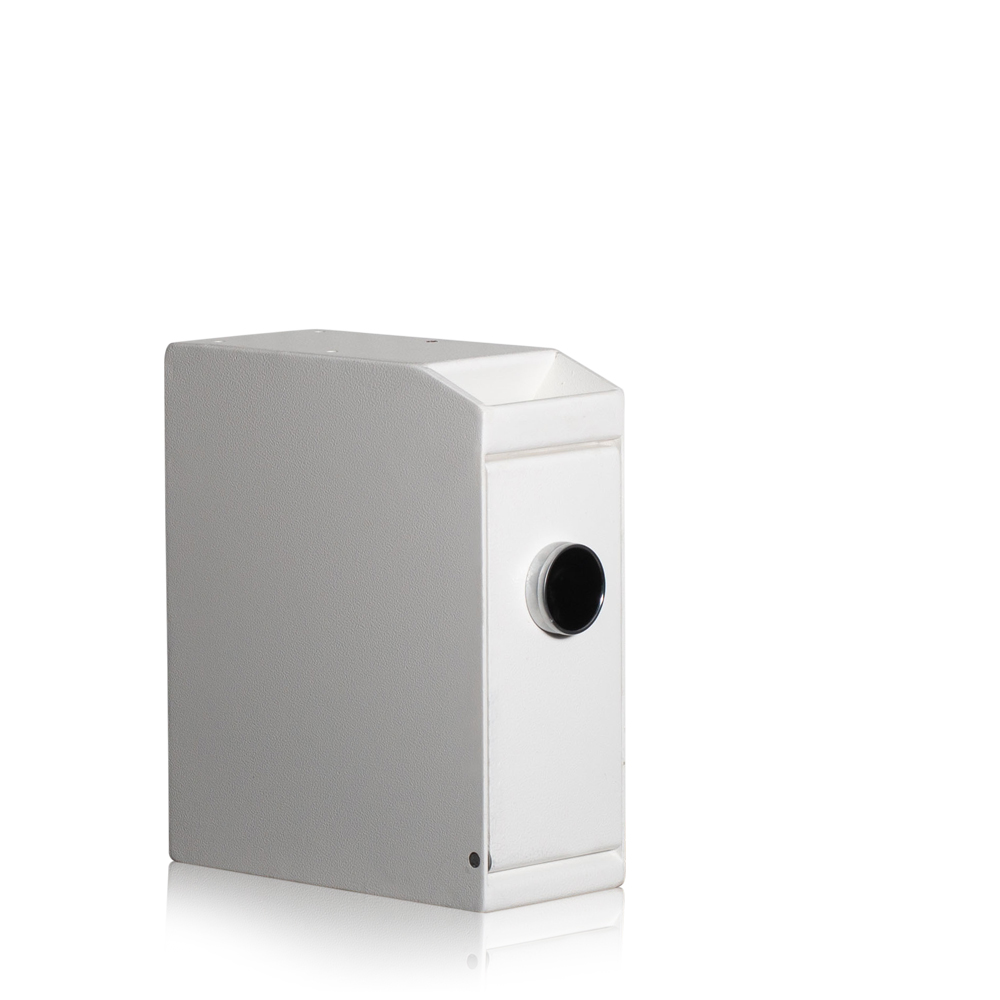
- Existing doors with no desire for structural changes: The battery-powered box lock Ü-Lock reports door signals via Bluetooth Low Energy without running cables into the door leaf. EnOcean wireless sensors without their own power supply can also be integrated.
- Doors that only need to be monitored: A retrofitted I/O module reports the opening contact via LTE, WiFi, LAN, or RS-485 and connects additional sensors such as water detectors or temperature sensors.
For offline doors, such as those behind main and secondary entrances, the manufacturer-independent OSS standard is used. RFID readers write credentials onto encrypted transponders, which carry this information to the offline door. This also allows network cabinets or lockers within a security zone to be secured.
Context
The German Critical Infrastructure Umbrella Act (KRITIS-Dachgesetz) requires operators of critical facilities, for the first time, to demonstrate physical resilience – including a risk analysis, a resilience plan, and a reporting obligation for significant disruptions within 24 hours. Access control systems must detect tampering on-site and report it immediately, both to a permanently staffed office and to personnel on location. The classic architecture reaches its limits particularly at small, unmanned sites, each with its own controller and control cabinet.
The virtual controller approach addresses precisely this problem: because the components are mounted directly on the door and controller computation, star cabling, and control cabinet construction are no longer needed, projects become easier to plan for installers and planners. Existing doors can also be retrofitted without new cable runs.
Practical tips
- With LTE or WiFi connectivity, the power supply at the door replaces the cable run to the controller, which can be up to 100 meters long – according to the manufacturer, this saves up to 80 percent of cabling.
- With Power over Ethernet (PoE), a single Ethernet cable is sufficient for both power and data; savings here amount to up to 50 percent.
- For sites without an economically retrofittable network or WiFi, an LTE connection with a private APN is advisable, as implemented, for example, at six barrier systems across several parking garages for around 5,000 employees and service providers.
- For branches with one or two doors, readers and STAQ modules can be connected via WiFi to a Linux-capable router that runs the management software and ACU – without additional server infrastructure. In one such project, costs were reduced by up to 60 percent compared to classic systems.
- Every component should have a secure element that stores cryptographic keys in a tamper-proof manner, as well as X.509 certificate-based authentication. Transponders such as MIFARE DESFire EV3 with AES-128 encryption further increase tamper protection.
- On-premises operation without any cloud requirement makes coordination with data protection officers and works councils easier.
Outlook
With networked door components and a virtual controller, every door becomes an independent, secured building block – from a single branch office to a network cabinet within a security zone. This creates a scalable solution for CI operators designed to meet increasing legal requirements for physical resilience. Installers and planners benefit from significantly reduced installation effort, as controller computation, control cabinet construction, and extensive cabling are eliminated. The approach is also relevant from a resource perspective: less hardware means less copper and material used, as well as lower power consumption during operation. Since components can also be relocated as needed, they remain in use longer. For the security industry, this modular, network-based approach is therefore likely to serve as a model for future access control solutions at distributed sites.