Collection Box for Clubs and Societies: Protecting Cash Donations and Making Dual Control Work
At the club fundraiser, at the information stand, in the clubhouse: cash goes into a tin, a jar or a cardboard box. That evening one person counts it on their own and brings the money to the bank. What is missing is not good intentions but a procedure that protects the treasurer. This article looks at what guides for clubs and societies demand of the cash box and how a lockable collection box with two locks puts that into everyday practice.
The treasurer's responsibilities
The treasurer manages the club's funds and the cash book, collects membership fees and other income and draws up the annual accounts. Three rules apply to the cash box, summarised as follows in the guide "Kassenwart im Verein" from seismart (a German online guide for clubs, 2026 edition):
- "The cash box must never be in the negative." A negative balance points to booking errors or shortfalls.
- "Every expense should be countersigned by the treasurer or another authorised person." That is dual control, also known as the four-eyes principle.
- Receipts must be kept – for at least ten years in the case of charitable organisations.
On top of this comes the cash audit: at least two auditors who do not sit on the committee check the cash book, receipts and cash balances. When the cash box passes to a successor, the Verbandsbüro (a German advisory service for associations; guide "Kassenübergabe im Verein", 22.08.2025) recommends a handover record of all cash balances, signed by both sides, and a "two-person cash principle" in day-to-day operation.
As for liability: under § 31a BGB (the German Civil Code), volunteer committee members are liable to the club only for gross negligence or intent. Still, nobody wants to end up having to account for a shortfall they had no part in.
When cash donations turn into a problem
Donations at a stand or in the club bar come without a receipt. Nobody knows how much was in the tin before it was emptied. If a single person opens it, counts it and lodges the money, at the end of the day it is their word against any suspicion. This exact situation causes rows in clubs, even when everything was done by the book.
The answer is not to distrust the treasurer, but a container that enforces dual control: one that can only be opened when two people are there at the same time.
A collection box with two locks
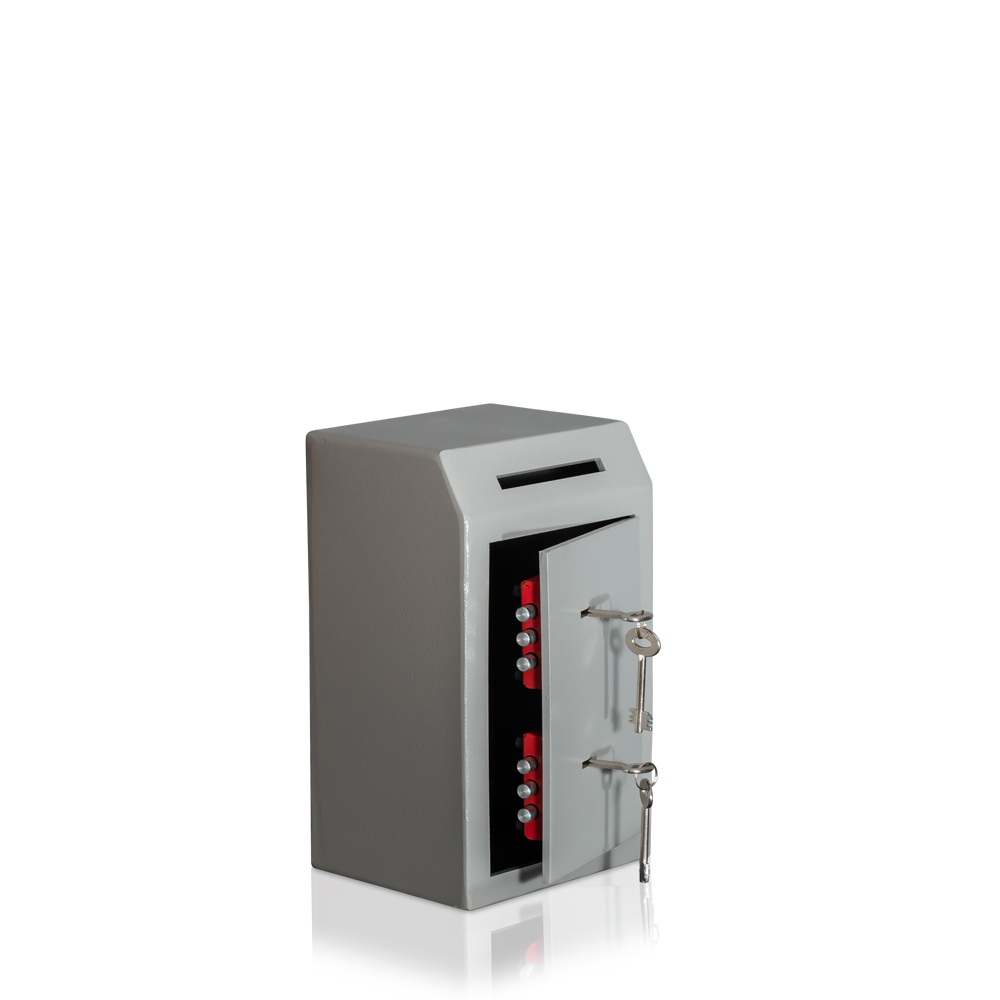
The collection box with corner drop slot, dual control is designed for precisely this routine. Two locks secure the door, and it opens only with both keys together. One key stays with the treasurer, the other with the chairperson or one of the auditors. Emptying is therefore automatically a two-person job, and the record (date, amount, two signatures) takes a minute to write.
Other features that matter in a collection box for a club:
- Drop slot 10 × 100 mm for coins and notes, with an anti-fishing guard so nothing can be pulled back out.
- Steel body to VDMA 24992 (a German VDMA standard sheet for safes), security level A: 3 mm walls, 6 mm door, 300 × 180 × 150 mm, 8 kg.
- Wall anchoring with the fixing material supplied. A box that can be carried off is no safeguard.
- Insurance rating up to about 1,500 euros; the exact figure depends on the insurer.
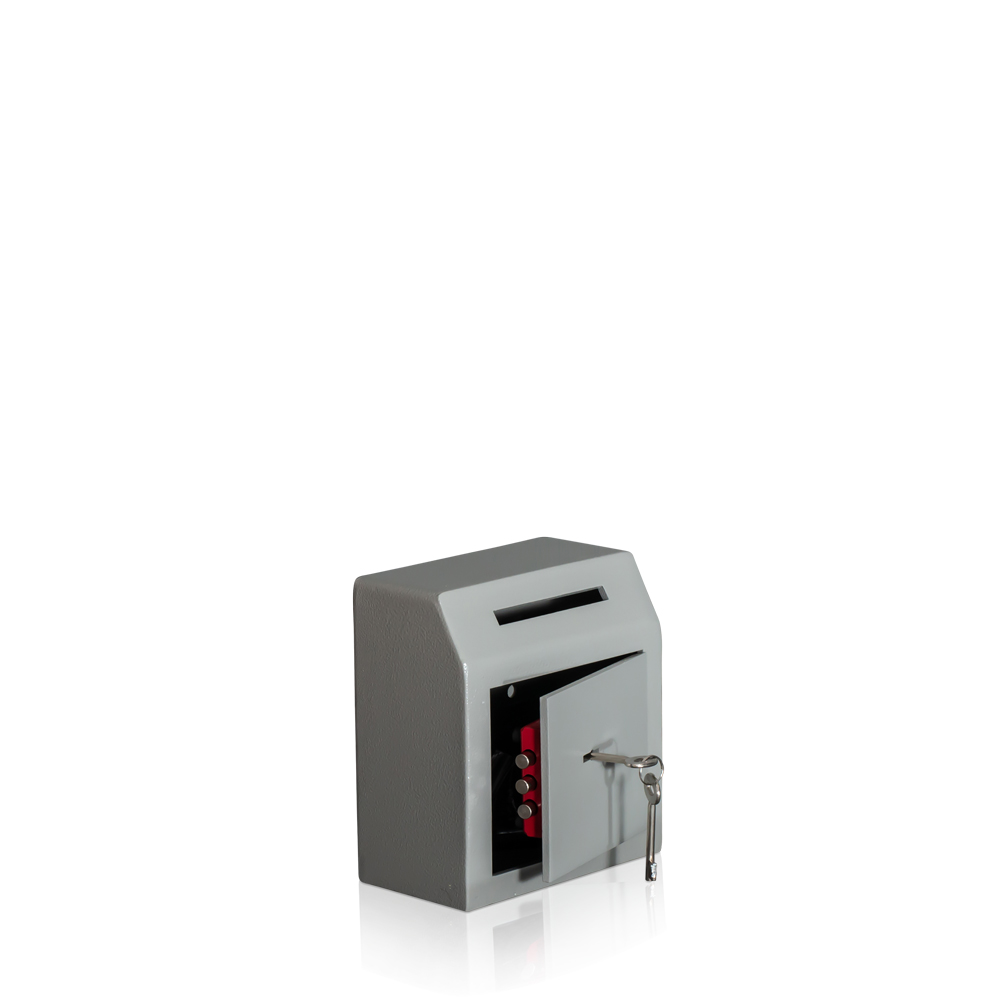
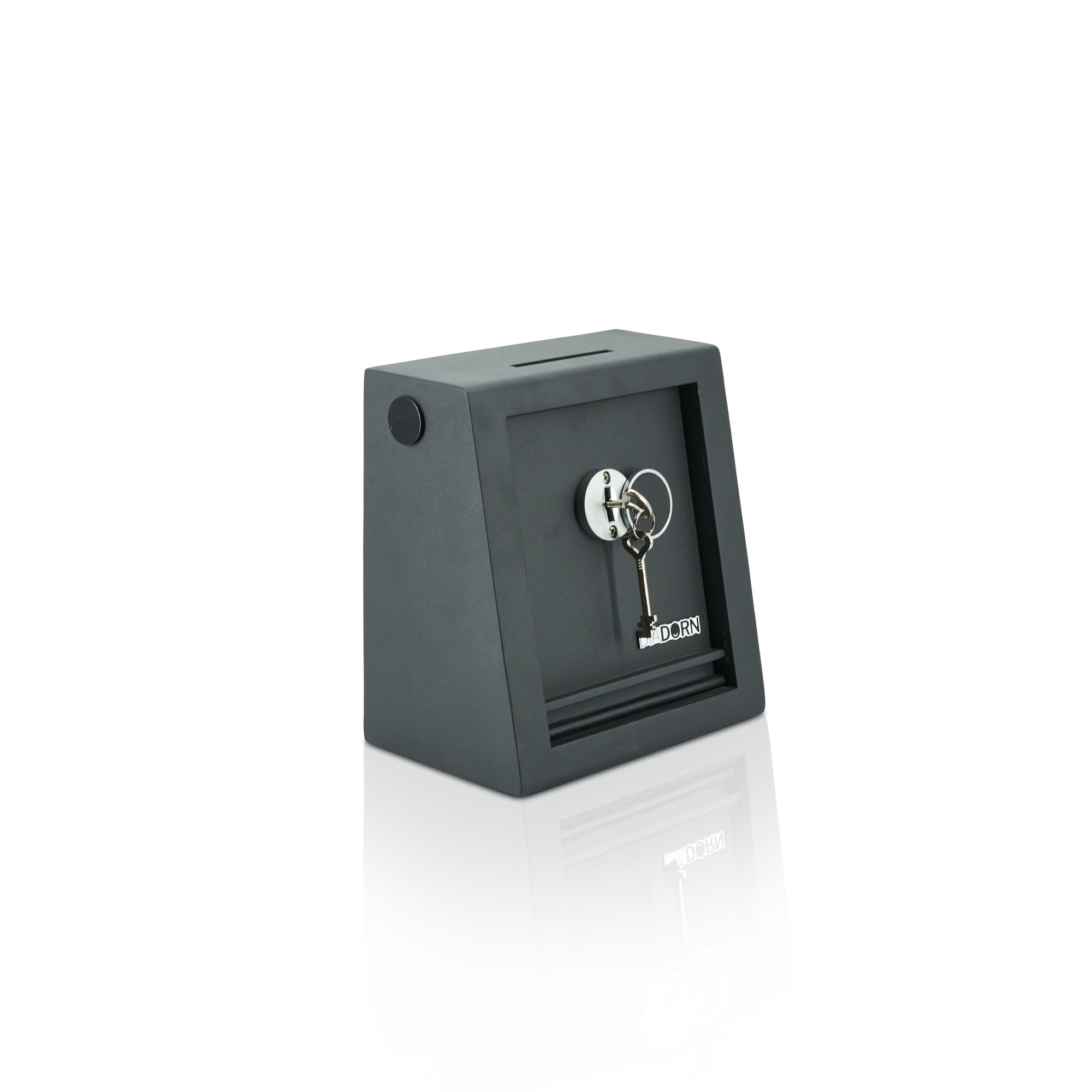
For smaller premises there is the collection box with corner drop slot with one lock and two keys (200 × 180 × 100 mm, about 5 kg), and for outdoor and unattended spots the heavy-duty collection box in 5 mm steel with ten fixing points. A customer rightly points out there that concrete or masonry calls for proper heavy-duty anchors.
All models can be found in the category Collection boxes and offertory.
A routine that fits any club constitution
- Drop it in: Every cash donation goes into the box right away – not into a pocket and not into the petty cash.
- Empty it in pairs: The treasurer and the second key holder open the box together, count the contents, enter the amount in the cash book and both sign.
- Lodge it: The counted amount is lodged to the club's account, and the lodgement slip is filed with the count record.
- Audit: The auditors see count records and lodgement slips side by side, so any gap stands out at once.
- Handover: When a new treasurer takes over, the box is emptied together, the balance noted in the handover record and the key passed on.
In short
Dual control features in nearly every guide to club finances, yet it often falls down in practice: who is going to stand by every time the donation tin is emptied? A collection box with two locks settles that without any argument. The treasurer is protected, the auditors have their records, and donors know their money is not sitting in a cardboard box.
Sources: seismart, "Kassenwart im Verein: Aufgaben & Pflichten" (2026 edition) · Verbandsbüro, "Kassenübergabe im Verein: sicher & stressfrei" (22.08.2025) · § 31a BGB (liability of volunteer committee members) · Product details: product pages diadorn.de, as at 02.10.2026.