Anchor a deposit safe correctly - the security factor
Discussions about safes usually centre on steel thicknesses, lock systems and security levels. What almost always gets missed: the best safe protects nothing if it isn't firmly fixed to the building. An unanchored deposit safe may weigh 30, 50 or 80 kilograms - that sounds like a lot, but for two perpetrators with a sack truck it can be carried off in under two minutes. The work of breaking it open then takes place at leisure in a garage, a wooded area or a workshop.
Anchoring is therefore not a detail of installation, but the decisive factor that actually turns a safe into a safe.
Why anchoring decides the entire security concept
Deposit safes are designed so that an attack on site requires time, tools and noise. Steel walls, locking mechanisms and concealed deposit systems are designed to stop the attacker at the location of use. If the business loses this "place of use" - because the safe is simply taken away - the entire protection logic is undone. The perpetrators have hours, days or weeks to open it at leisure.
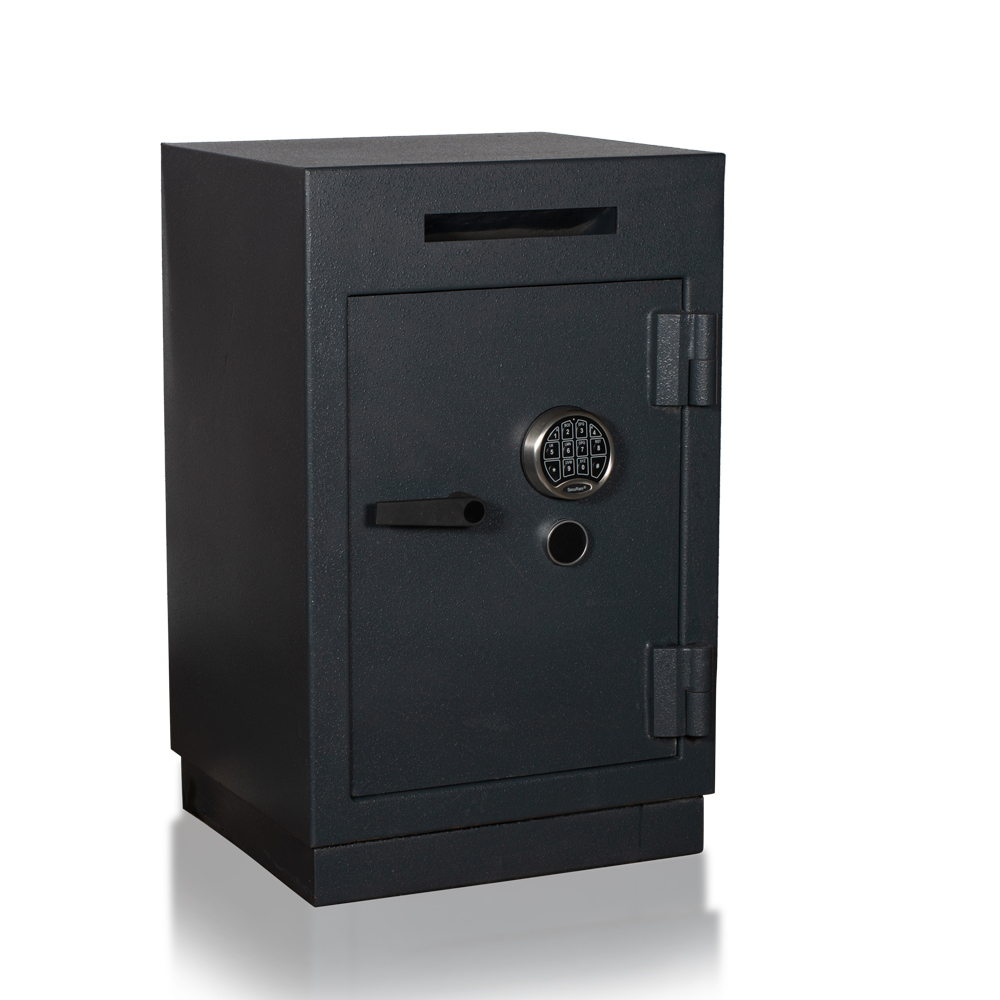
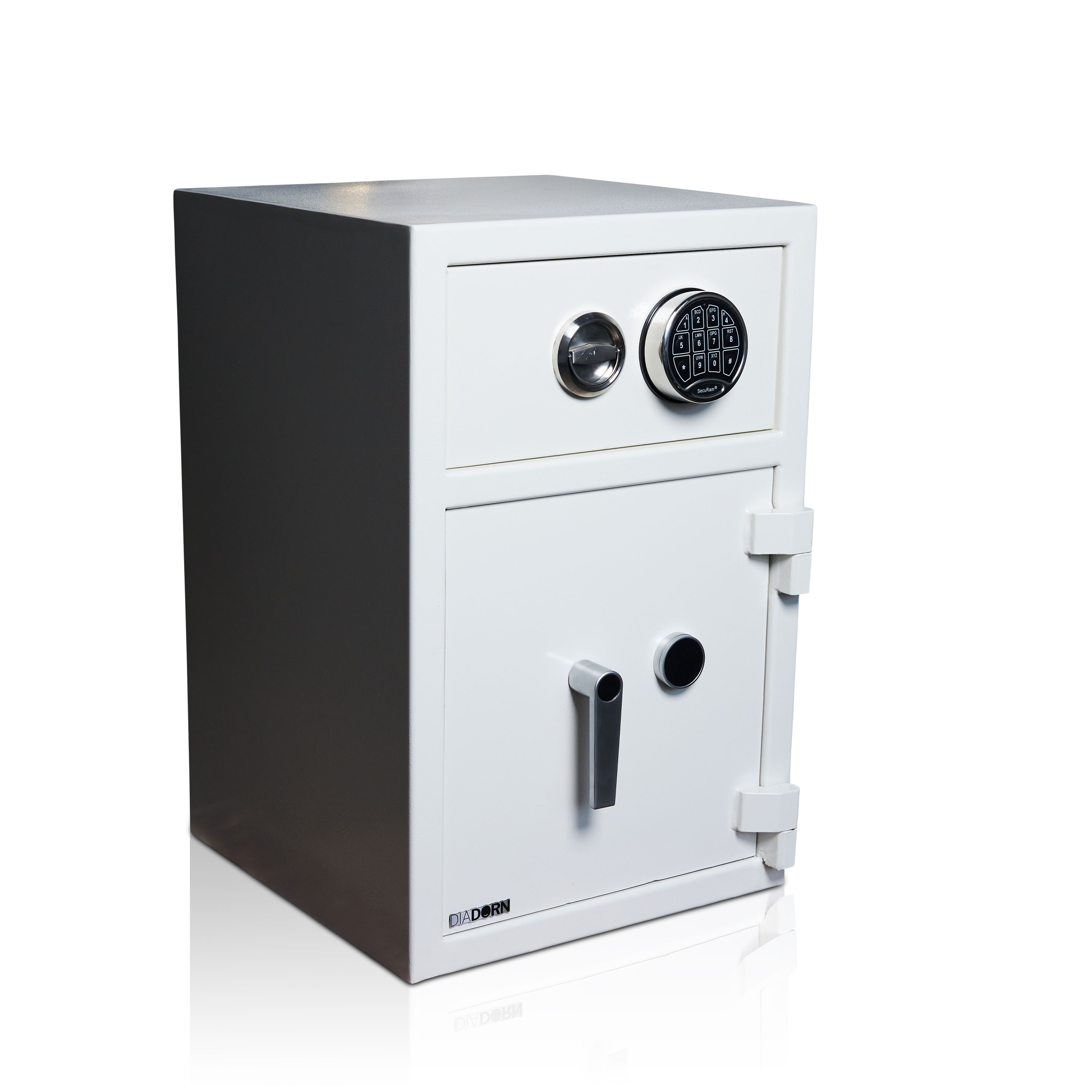
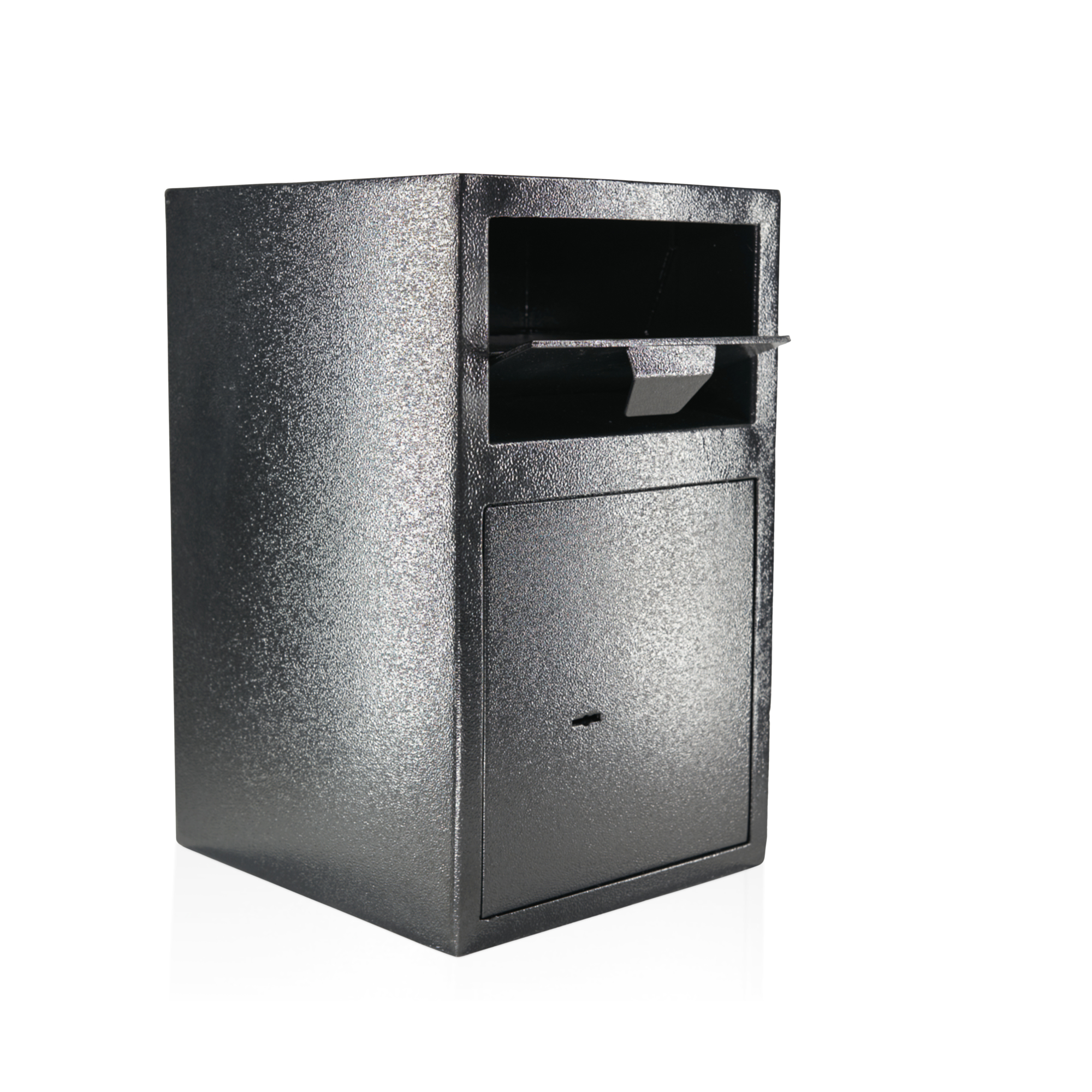
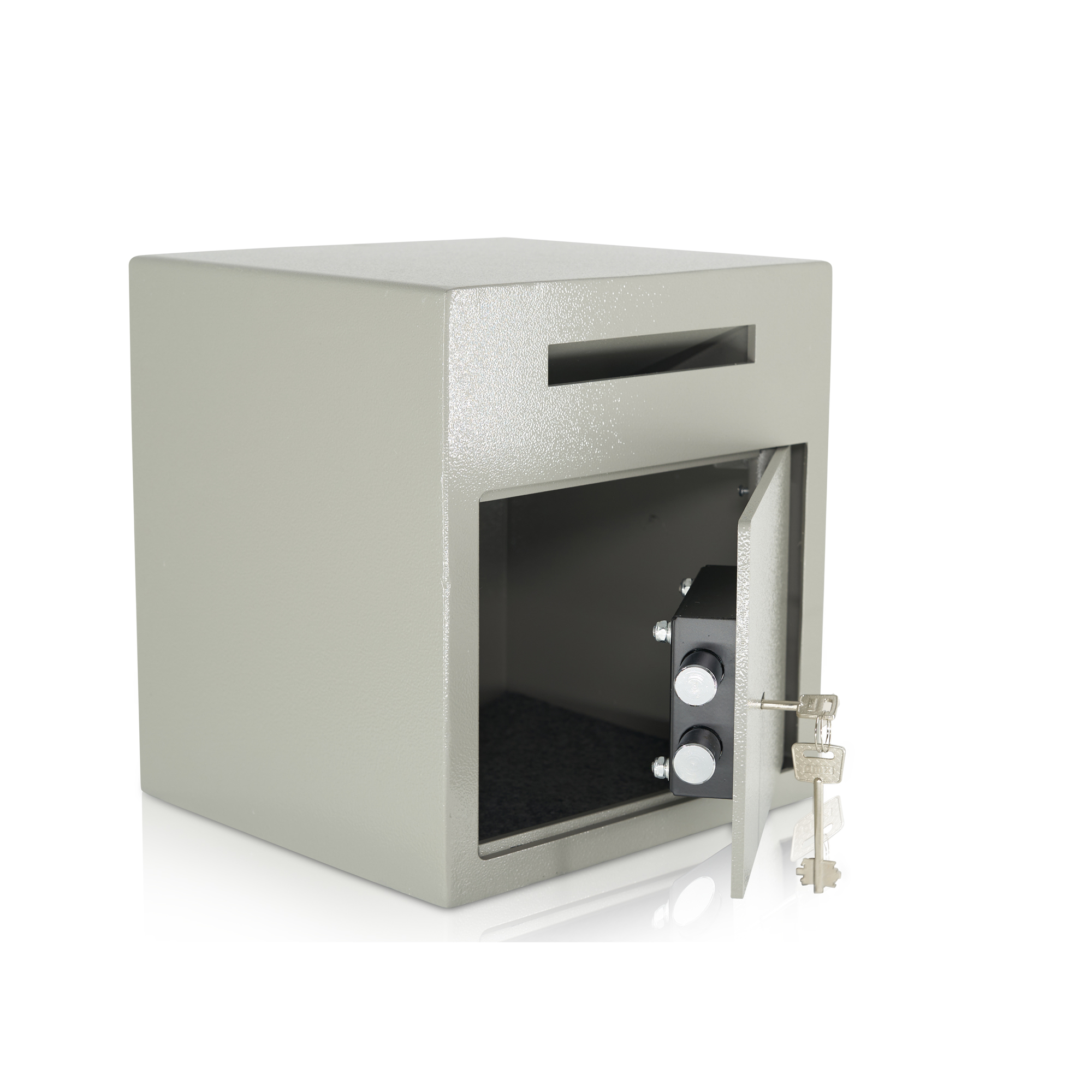
This applies all the more to compact models in hospitality and retail: counter deposit safes, drawer versions and smaller deposit safes with slot are deliberately dimensioned to fit unobtrusively into the operation. This compactness is an advantage in everyday use - and a risk at night, when the safe isn't firmly connected to the building structure.
Insurers know this. Most commercial insurance policies require professional anchoring as soon as the safe weight falls below a certain limit (depending on the insurer, usually between 300 and 1,000 kilograms). Without anchoring, insurance cover may be reduced or void in the event of a claim.
Check the right substrate - before drilling
Before anchors and tools are even discussed, the substrate decides what is possible.
Reinforced concrete is the ideal substrate. It supports any load, holds any heavy-duty anchor and gives the safe a practically indestructible base. In most commercial properties - shops, workshops, bakeries, restaurants - there is a concrete floor beneath the screed.
Screed on concrete is the standard case. Here you have to drill through the screed and into the concrete underneath. The anchor depth should be such that the anchor grips at least 60 to 80 millimetres into the load-bearing concrete - not just the screed. Screed alone breaks out under tensile load.
Wooden floors, laminate, PVC on a wooden substructure are unsuitable as the sole anchoring base. Wooden joists give way under leverage. Solution: a heavy steel plate (at least 10 millimetres) is laid on the floor and the safe is bolted to this plate. The plate itself is given additional mass - for example, by fixing the base plate into load-bearing wooden joists with long tension anchors. That is a compromise, not an equivalent solution.
Wall mounting is the rarer variant for deposit safes, but is an option for lighter models or installations in concealed places. Prerequisite: a solid wall of concrete, lime sandstone or solid brick. Hollow brick, aerated concrete and plasterboard walls are ruled out for the security-relevant main fixing. Lightweight partition walls hold the safe in everyday use, but won't withstand a targeted tear-off.
The most stable solution for heavy deposit safes is the combination of floor and rear-wall anchoring. This combination makes it virtually impossible to tip the safe or lever it off.
The right fixing material
The most common mistake in safe installation is using unsuitable plugs. A nylon expansion plug, of the kind intended for picture frames or shelves, will not hold a safe. Only two material groups are suitable for anchoring deposit safes:
Heavy-duty or bolt anchors made of steel (for example M10 or M12) are the standard for concrete floors. They expand inside the drill hole as the nut is tightened and withstand high tensile and shear forces. Make sure they are approved for concrete and have sufficient anchoring depth. With an M10 heavy-duty anchor, this is typically 60 to 90 millimetres in the load-bearing concrete.
Bonded anchors (chemical anchors) are the highest grade. A two-component mortar is injected into the drill hole and the threaded rod is pressed in. After curing, the connection is force-locked and practically impossible to release - stronger than the surrounding concrete itself. Recommended at particularly security-relevant locations, near drill-hole edges or in concrete floors with micro-cracks.
Number of anchors: for all DiaDorn deposit safes with floor drillings, we recommend using all the fixing points provided. Anyone anchoring only two of four holes wastes a large part of the holding force and creates leverage points.
The tools you really need
A cordless screwdriver and a wood drill are not enough. For proper safe anchoring in concrete, you need on site:
A rotary hammer with SDS connection is mandatory - a simple impact drill won't manage modern concrete floors cleanly. The hammer drill bit must match the anchor diameter, usually 10 or 12 millimetres. Also a vacuum cleaner or a blow-out pump to thoroughly free the drill holes from drill dust before setting the anchors - an often underestimated step that is decisive for the anchor's holding force. A torque wrench ensures that the anchors are neither too loose nor that the concrete cracks from over-tightening. A spirit level ensures the safe stands flat; tilted safes put long-term one-sided strain on hinges and lock mechanism.
Procedure for a professional installation
The location is chosen first - not near windows or doors, but at a place easily accessible to the staff in the case of deposit safes. The safe is placed in position and the drill points on the floor are marked through the fixing holes. The safe is then moved aside.
The holes are now drilled to the correct depth. A rule of thumb: anchor length plus 10 millimetres reserve. After drilling, the holes are vacuumed or blown out. With bonded anchors, the mortar is now injected, the threaded rod inserted and left to cure. With heavy-duty anchors, the anchor is hammered through the safe's floor drilling into the concrete and the nut is tightened with the prescribed torque - observe the manufacturer's instructions, typically 30 to 50 newton-metres for M10.
Only then is the safe locked, the keys checked and the safe handed over to the staff.
Common mistakes that are easy to avoid
In practice we keep seeing the same mistakes with improperly installed deposit safes: safes that were "for the time being" simply set up and then left unanchored for years. Anchors that grip only in the screed and break out under the first load. Drill holes that weren't vacuumed, so the anchor sits on a cushion of drill dust. Standard nylon plugs, which are fundamentally unsuitable for security-relevant fixing. And wall mountings in lightweight partition walls, where the entire plasterboard section can be torn out of the wall together with the safe.
Each of these mistakes can be avoided with very little extra effort.
Special case: rented property
Anyone working in rented premises must agree the anchoring with the landlord. Drill holes in the floor are permitted in nearly all cases, provided they are properly closed up on moving out. A short written consent prevents later disputes about the deposit. With listed buildings or historic floor coverings, it is worth consulting a specialist firm that knows alternatives.
Purely "free-standing" placement without any fixing, in order to avoid asking the landlord, is not an option from a security or insurance point of view.
Conclusion
Anchoring is not the closing point of safe installation, but its most important single step. Steel, lock and deposit technology only develop their effect when the safe is securely connected to the building. One extra hour of work during installation decides whether the safe does its job in an emergency or simply disappears overnight.
All DiaDorn deposit safes are equipped with prepared fixing points in the floor - and additionally in the rear wall on heavier models. The relevant fixing dimensions and recommendations on anchor materials can be found in the respective product documentation. For questions on installation at special locations, our team will be happy to advise you personally.